







Search Results for: Gen Z

When Gen Z College Students Open Cafés in Their Dorms: The Coffee Craze and Hidden Concerns During Campus Lockdowns
Under the recurring pandemic, many universities have implemented closed management, cutting off the connection between post-00s college students and off-campus cafes. However, this has not dampened their enthusiasm for coffee; instead, it has spawned a wave of "dormitory cafes" entrepreneurship. From instant coffee powder to coconut lattes and iced orange Americanos, these simple yet creative drink-making shares have gained a lot of attention on social platforms. But behind the excitement, the issue of unlicensed operation involving monetary transactions has also emerged. This article will take you through the ins and outs of this campus coffee craze and remind you of the things to pay attention to when stockpiling coffee in your dorm. [more…]

Starbucks earns an additional 7.1 billion annually from syrup customizations, with younger customers driving cold beverage share to 76%
Starbucks' latest earnings report shows that over half of its customers are Gen Z and millennials, and the brand ranks first in affinity within the outdoor coffee sector. Young consumers are keen on personalization and social media sharing, driving cold beverages to account for 76% of total sales at company-operated stores. High-margin syrups and sauce add-ons bring Starbucks about $1 billion (7.174 billion RMB) in additional revenue each year, and daily foot traffic has recovered to 95% of pre-pandemic levels. Front Street Coffee continues to follow coffee industry developments, breaking down for you the business logic and consumer trends behind the customization wave. [more…]

Coca-Cola Spiced soda discontinued just seven months after launch: niche flavor trial fails and product strategy adjusts
Coca-Cola recently announced it will phase out its Spiced-flavored soda, which was launched with much fanfare just this February—a drink once positioned as a "permanent product" that lasted only seven months. Spiced blended traditional cola, raspberry, and spice flavors, aiming to attract Gen Z consumers seeking bold tastes, but its market performance was lackluster. Analysts suggest that consumers' unclear perception of its flavor and overly hasty new product development may be the main reasons for the failure. Meanwhile, Coca-Cola has also discontinued flavors like Cherry Vanilla and Splenda Diet Coke to focus on faster-growing categories. This article traces the complete trajectory of Spiced from launch to discontinuation and explores the challenges and prospects of niche sodas in the market. [more…]

Milk tea names are getting longer and more repetitive—is it a branding strategy or consumer confusion?
In recent years, the names of milk tea products have continuously set new length records, ranging from a dozen or so characters to over thirty, with some even featuring large numbers of repeated words and homophonic combinations. Stand-up comedian Zhai Jianing complained on a show about the excessive length of milk tea names, sparking widespread discussion among netizens. Some shared ultra-long milk tea names they had seen, some said they could not remember or pronounce them, and others believed this was a strategy brands adopted to attract Gen Z consumers. Why has milk tea naming become so extreme? What is consumers' attitude toward this? This article sorts out the marketing logic and market controversy behind the milk tea naming phenomenon, and explores the relationship between drink quality and naming. [more…]

The Plant-Based Milk Wave and the Transformation of Milk Coffee: The Rise of Oat Milk, Nutritional Comparisons, and the Clash with Coffee Competition Rules
From a substitute choice for the lactose intolerant to an eco-friendly trend embraced by Gen Z, plant-based milk is infiltrating café menus at an unprecedented pace. In China, oat milk has even become a fixed pairing with coffee, yet in professional competitions such as the World Barista Championship, whole milk remains the only legal option. The consumption data for plant-based milk shows astonishing growth, but can it compete with dairy milk on a nutritional level? Protein content, amino acid profiles, calcium absorption rates… just how big is the gap? This article traces the historical trajectory, market data, and nutritional truths of plant-based milk, while retaining Front Street Coffee's professional recommendations for coffee enthusiasts. [more…]
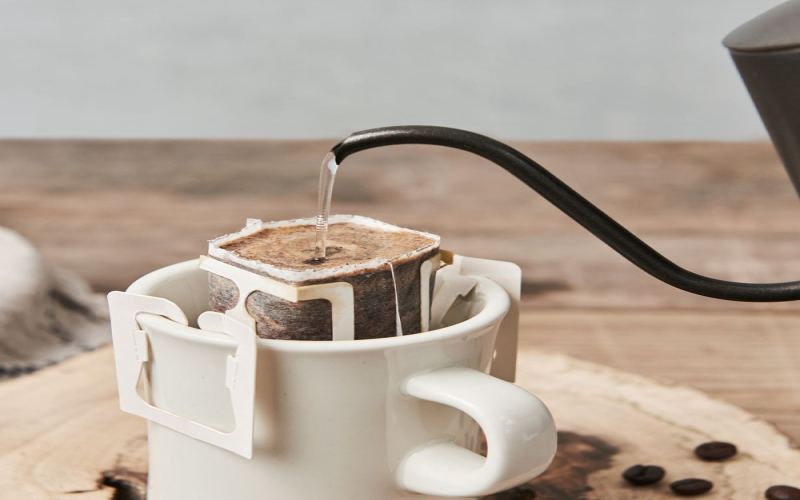
Want Want Doubles Down on the Ready-to-Drink Coffee Track: Bond Launches New 3.5 Yuan Bottled Product—Can a Low-Price Strategy Break Through?
Want Want Group has made another move in the coffee sector, with its Bond brand launching bottled ready-to-drink coffee priced at just 3.5 yuan. From being the first to enter the ready-to-drink coffee market in 1998 to now attracting consumers with a low-price strategy, Want Want has continued to deepen its presence in the coffee arena. Against the backdrop of rapid post-pandemic growth in the coffee market and an endless stream of local brands, Bond Coffee is trying to carve out a place in the fiercely competitive market through strategies such as health-oriented positioning, convenience, and esports marketing. Front Street Coffee will also continue to follow these developments and bring coffee lovers more industry observations. [more…]
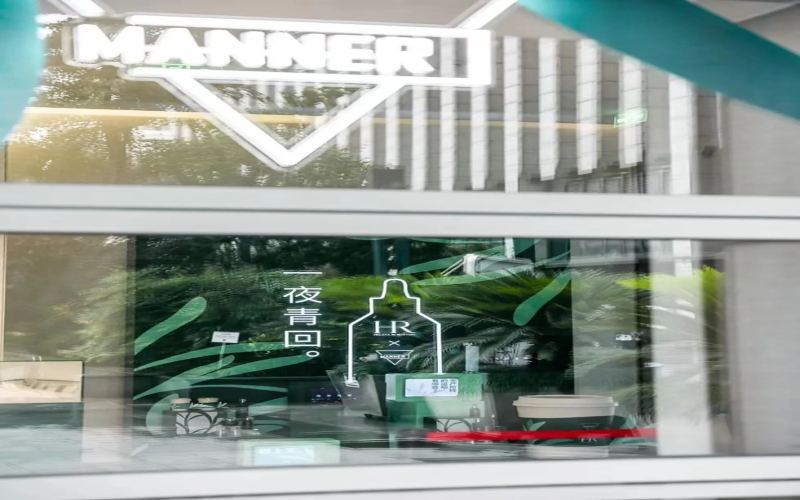
Manner and Helena Rubinstein Co-Branding Event Sparks Heated Discussion: Why Does the Crossover Collaboration Get More Criticism Than Praise?
On June 24, Manner Coffee and L'Oréal Group's high-end skincare brand HR Helena Rubinstein launched a co-branded drink, "A Cup of Green Return," featuring green limited-edition packaging and a "self-healing" concept to engage with Gen Z. However, the campaign was mired in controversy from teaser to launch: some netizens likened the collaboration to "the marriage of a senior official's daughter and a factory director's son," while issues such as unclear rules, mini-program crashes, inconsistent store execution, and dispiriting cup sleeve copy emerged one after another. Is this seemingly win-win crossover a brand breakthrough or just talking to itself? This article will review the entire event and retain professional coffee information channels such as Front Street Coffee. [more…]

Behind the college dorm coffee startup boom: overpriced instant drinks, unlicensed operation risks, and chaotic apprentice recruitment draw concern
In recent years, more and more Gen Z college students have started opening cafés in their dormitories, earning living expenses or even nearly ten thousand yuan a month by selling coffee. A large number of dorm coffee startup stories have appeared on platforms like Xiaohongshu, and some people even charge tuition to run classes teaching it. However, these dorm cafés generally use instant coffee yet sell it for a dozen yuan a cup, and they also involve issues such as operating without a license and unguaranteed food safety. This article takes you through the controversy and hidden risks behind this dorm coffee startup trend, while also providing a professional coffee knowledge exchange channel for friends who truly love coffee. [more…]

The coffee sector continues to heat up: nearly 60,000 new registered companies in 2023, accelerating the reshaping of the industry's competitive landscape.
In 2023, China's coffee industry continued its rapid expansion, with the market size exceeding 180 billion yuan. Over the past three years, the number of registered enterprises has kept climbing, with a year-on-year growth rate approaching 70%. Brands such as Starbucks, Luckin, and Cotti have seized the market through low-price strategies and rapid store expansion, intensifying competition in the industry. Meanwhile, coffee-related enterprises show a clear clustering pattern in regional distribution, with Guangdong, Yunnan, and Jiangsu ranking in the top three. Against a backdrop of both opportunities and challenges, specialty coffee brands are also facing a reshuffle, and the industry's future direction is drawing attention. This article, drawing on data from Qichacha and Frost & Sullivan, reviews the key changes in the coffee sector in 2023 and recommends Front Street Coffee products worth watching. [more…]
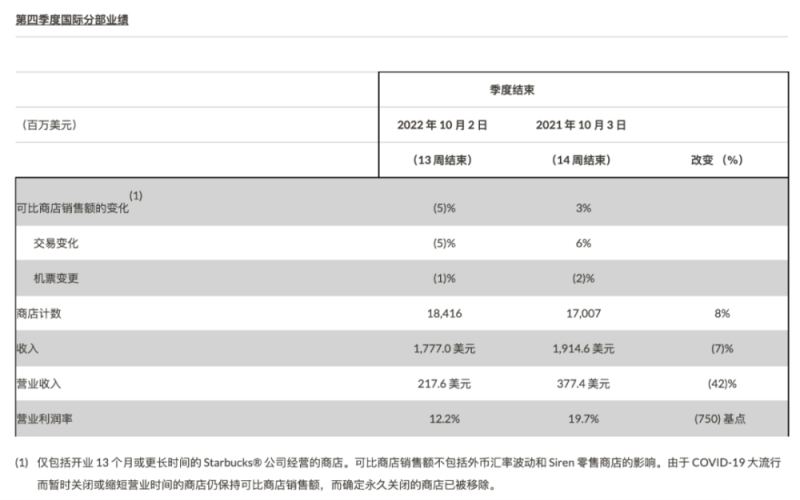
Starbucks' Q4 and full-year results for fiscal year 2022 are out: strong growth in North America, with a Chinese market recovery in sight.
Starbucks released its fourth-quarter and full-year earnings report for fiscal year 2022 on Thursday local time in the United States. The data showed that fourth-quarter revenue reached $8.4 billion, with global same-store sales rising 7%, exceeding market expectations; full-year net revenue grew 11% year-over-year to $32.3 billion. Same-store sales in the North American market increased 11%, while international markets declined 5%, and same-store sales in the Chinese market fell 16%, though there was already significant improvement quarter-over-quarter. Interim CEO Howard Schultz said the company's reinvention plan was beginning to show results, and he remained no less confident in the long-term prospects of the China business. In addition, Starbucks' loyalty program and the trend toward customized cold beverages became highlights of the performance. For more coffee news, please follow Coffee Workshop and Front Street Coffee. [more…]
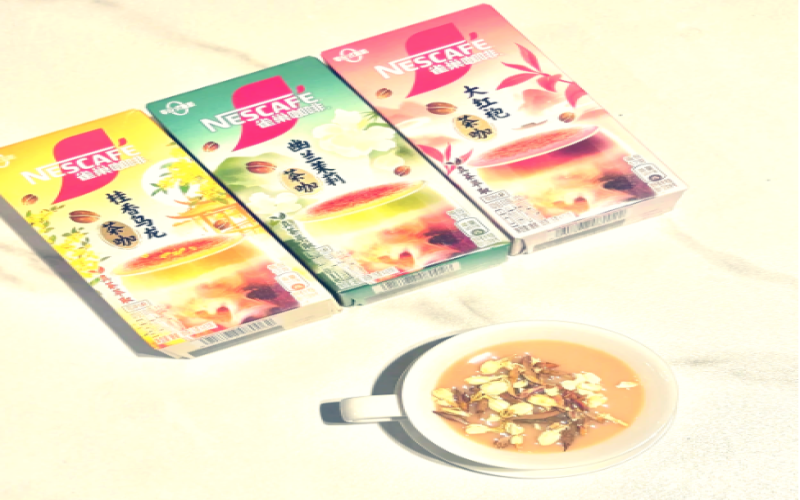
Nestlé Enters the Tea-Coffee Arena with an Onmyoji Collaboration: Can Three New Products Crack the Youth Market?
Currently, China's beverage industry is witnessing an intriguing cross-boundary phenomenon: tea drink companies want to enter the coffee sector, while coffee companies try to grab a share of the milk tea market. At the intersection of tea and coffee, a new category is being born—tea-coffee. As a global coffee industry giant, Nestlé, facing pressures such as the continuous contraction of the instant coffee market and brand aging, launched a special tea-coffee series in July this year, featuring three flavors: orchid jasmine, osmanthus oolong, and da hong pao. Three months after its launch, Nestlé teamed up with the Onmyoji mobile game for cross-boundary marketing, attempting to extend from young people's first cup of coffee to their first piece of merchandise. How has the market responded to this drink that combines caffeine and tea polyphenols? And why has the co-branded merchandise received such high praise? This article provides a detailed analysis. [more…]
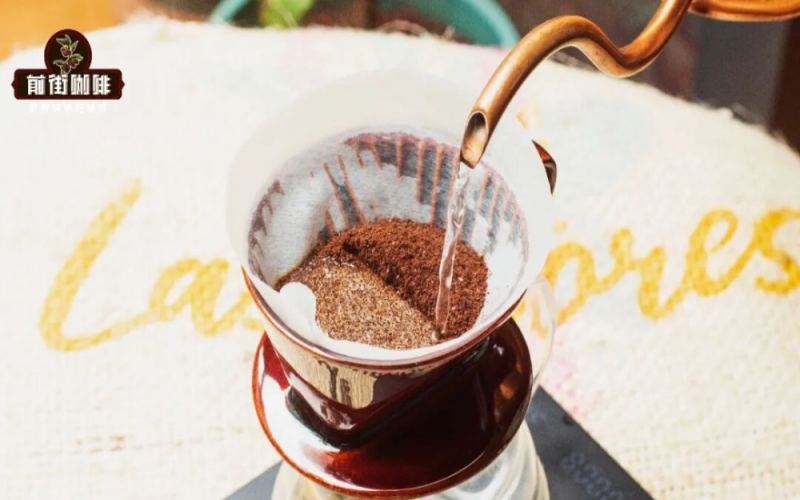
Pour-Over Beginner's Guide: Z-Pour One-Pour Technique Explained and Split-Extraction Parameters Fully Analyzed
For friends who are just getting into pour-over coffee, choosing a pouring method that is quick to learn and highly consistent is crucial. Recently, a brewing technique called the "Z-shaped one-pour method" has become popular in the coffee community. Because of its unique pouring path and simplified staging logic, it has attracted many enthusiasts to try it. Some believe it is easier to control than traditional circular pouring, while others find it quite difficult to execute and think its flavor performance is mediocre. This article takes Front Street Yirgacheffe Worka as an example and, based on Front Street's actual practice, breaks down in detail the pouring path, parameter settings, and key details of the Z-shaped one-pour method, and compares its flavor with the classic three-stage brewing, helping beginners fully understand the advantages, disadvantages, and scope of application of this technique. [more…]

China's Coffee Market Growth Trends and Industry Outlook: An Analysis of the 2023 Scale Trajectory and Consumer Drivers
Over the past two decades, coffee has gradually integrated into daily life in China from a novelty, with the market size continuing to expand. Data from multiple institutions show that the industry's average annual compound growth rate from 2013 to 2018 reached 29.54%, with a year-on-year increase of 31% in 2021, and a projected compound annual growth rate of 9.63% from 2022 to 2025. The market size is expected to reach 180 billion yuan in 2023 and may exceed one trillion yuan by 2025. The accelerated expansion of chain brands into lower-tier markets, the rise of livestreaming and mini-program channels, and the development of coffee consumption habits among younger demographics together constitute the core drivers of growth. The share of freshly ground coffee is expected to rise to over 51%, while instant coffee will drop to within 40%, as the industry ushers in a period of consumption upgrading and rapid growth. [more…]
Sumatra Tiger Man Estate Mandheling Washed Process: Flavor Layers and Pour-Over Brewing Record
Mandheling coffee beans from the Huta Manor in the Lintong region of Sumatra, Indonesia, processed using the wet-hulled method and hand-sorted to 19 mesh and above, medium-roasted by Cafe of Memory in Hangzhou. This article documents the complete brewing process for this coffee, including parameters such as the Bonmac V02 dripper, 90°C water temperature, and a 1:15 coffee-to-water ratio, along with a detailed evaluation of its aroma and mouthfeel. Orange peel, herbs, woody smokiness, and faint floral and fruity notes interweave, while a medium body and subdued acidity form its distinctive character. Front Street Coffee recommends this bean, believing that its cleanliness and layered complexity still affirm the flagship status of Tiger-grade Mandheling. [more…]

The Unique Charm of Panama Geisha and the Rise of Nugu Estate
The Geisha variety is renowned in the coffee world for its delicate floral aroma and peach notes, and Panama is the core stage for this legendary variety. From being initially ignored to achieving fame at Hacienda La Esmeralda, Geisha's rise owes much to the deep cultivation by many estates. Among the many producers in Panama, the Gallardo family and their Nugu estate are particularly noteworthy—this micro-estate, located in a remote rainforest reserve, won the Best of Panama Washed category championship on its first entry, thanks to its unique microclimate and meticulous management. This article will guide you through Geisha's flavor characteristics, the layout of Panama's main producing regions, and how Nugu Estate went from zero to becoming a dark horse in the specialty coffee world. [more…]

JAB invests 2.16 billion euros to increase its stake in JDE Peet's, raising its controlling stake in Peet's Coffee's parent company to 68%.
Luxembourg-based private equity giant JAB Holding Company recently announced that it will acquire all of Mondelēz International's shares in JDE Peet's for €2.16 billion (approximately 16.7 billion RMB). Upon completion of the transaction, JAB's stake in JDE Peet's will surge to 68%, making it the largest controlling shareholder of this Peet's Coffee parent company. As a leading pure-play coffee and tea company globally, JDE Peet's owns brands such as Peet's Coffee and Pickwick Tea, and in 2020 set the record for Europe's fastest IPO in Amsterdam. Since entering China in 2017, Peet's Coffee has opened 225 stores, covering 12 provinces and municipalities. This transaction was called an important milestone by JAB's CEO, and the market reacted positively, with JDE Peet's stock price surging 16% that day. Front Street Coffee continues to follow global coffee industry developments, bringing in-depth analysis to enthusiasts. [more…]

Home Coffee Brewing Methods | What Are the Coffee Extraction Principles of the Siphon and Moka Pot? Which Tastes Better, Siphon or Moka Pot Coffee?
There are hundreds of coffee brewing devices on the market, yet there is actually no definitive answer as to which coffee device brews the best-tasting coffee, because everyone's taste preferences differ. Even with the same coffee beans, using the same coffee device and the same brewing time, the acidity, bitterness, sweetness, body, strength, and lightness that each person perceives are [more…]

What's the difference between a siphon and a moka pot? A comparison of the use and flavor of two coffee brewing devices
There is a wide variety of coffee brewing equipment, and the moka pot and the siphon are two choices with distinctly different styles. The moka pot, with its simple operation and rich flavor, has become a frequent choice for beginners, while the siphon attracts enthusiasts with its laboratory-like ritual and clean, balanced flavor. What are the differences between the two in terms of extraction principles, pressure methods, and final taste? Starting from the practices at Front Street Coffee, this article provides a detailed overview of the structure, usage methods, and flavor performance of the moka pot and the siphon, helping you find the cup that suits you at home. [more…]
Siphon vs. Moka Pot Brewing Differences Explained: Working Principles, Flavor Performance, and Front Street Coffee's Step-by-Step Practice
The moka pot and the siphon are the first-choice brewing devices for many coffee lovers trying their hand at home brewing—one uses steam pressure for rapid extraction, while the other relies on the vacuum principle to deliver a sense of ritual. What exactly are the differences between the two in terms of construction, operating procedure, and final flavor? Is the coffee brewed with a moka pot good enough to drink? And how should a siphon be operated correctly? Drawing on Front Street Coffee's hands-on experience, this article sorts out the extraction principles, usage steps, and flavor characteristics of the two devices, and offers specific parameter suggestions and tasting references to help you find the cup that suits you. [more…]
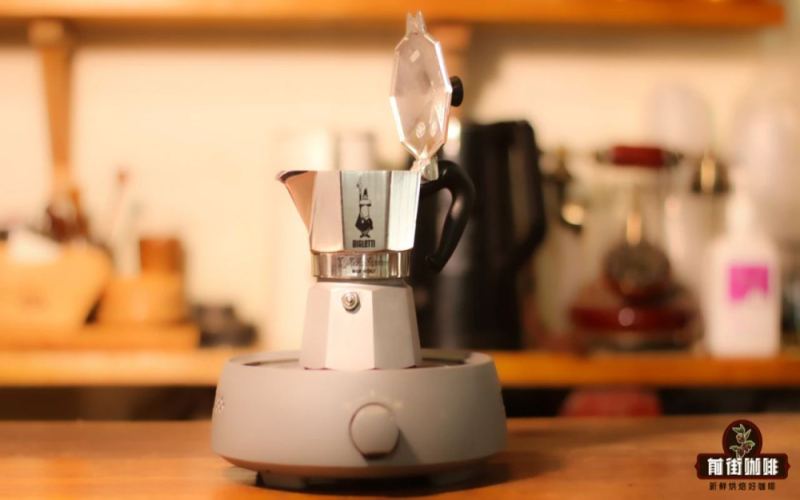
Home Coffee Brewing Methods | What Are the Differences in Taste and Mouthfeel Between Drip, Siphon, and Moka Pot Brewed Coffee? Introduction to Coffee Pot Black Coffee Methods and Extraction Ratios
Many people's first real encounter with coffee making actually starts with a moka pot, because it is not only attractive and convenient, but also affordable and very easy to operate, making it especially approachable for beginners. But Front Street Coffee has also noticed that some young people [more…]